_compressed.webp)
Guide
Don't Freeze: Same-Day Furnace Repair in Queen Valley, AZ
When Desert Nights Get Cold: Your Guide to Furnace Emergencies
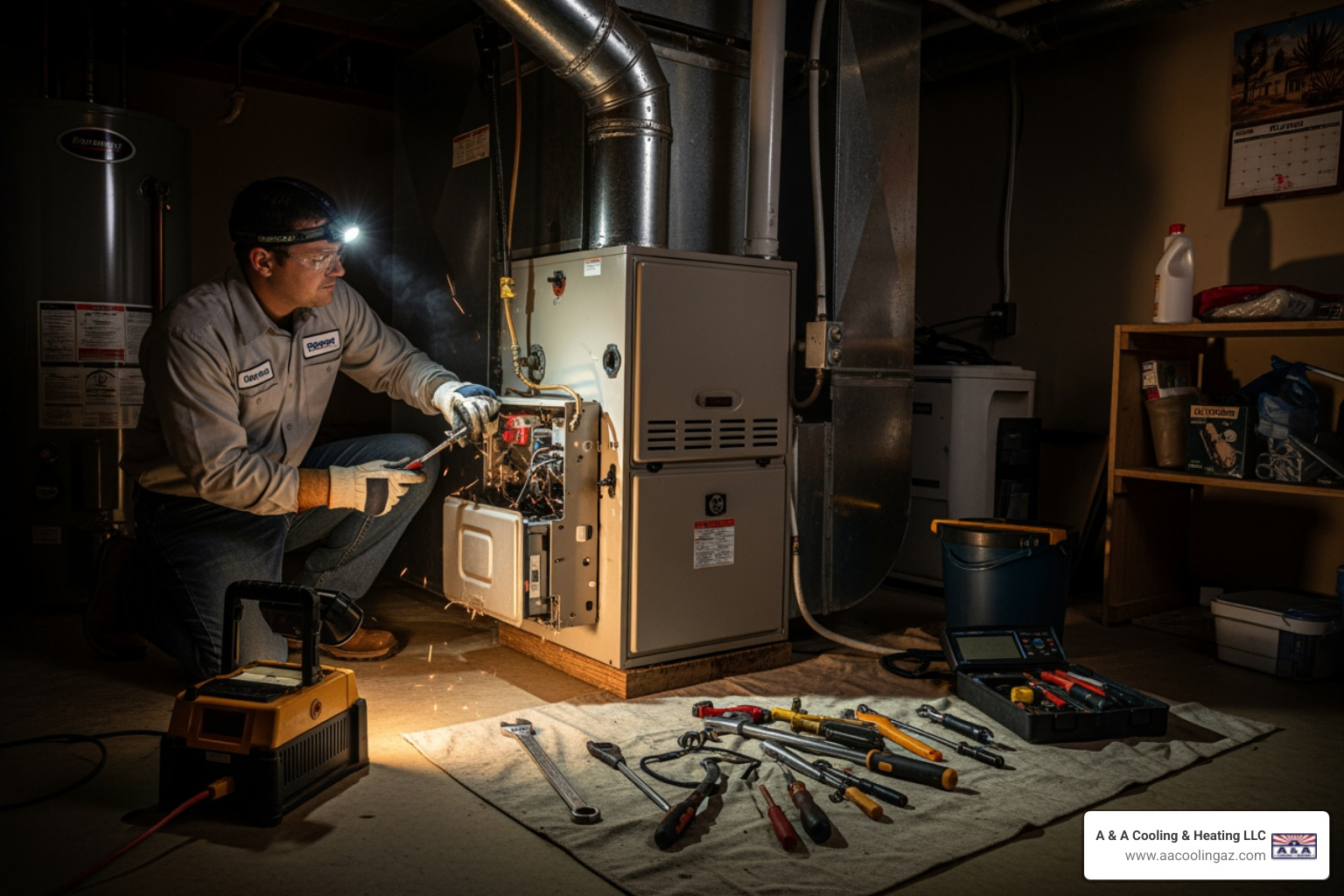
When you're facing a cold night in Queen Valley and your heating system quits, emergency furnace repair in queen valley, az becomes your top priority. Desert winters can bring sudden cold snaps, and a malfunctioning furnace isn't just uncomfortable—it can be unsafe.
If you need immediate help, here's what to do:
- Gas leak suspected? Leave immediately and call 911 from outside.
- No heat but no gas smell? Turn off the system and check your thermostat and air filter.
- Strange noises or burning smells? Shut down the furnace and call a professional.
- Yellow pilot light or weak airflow? These signal serious issues—get help now.
For comprehensive heating solutions, explore our HVAC services in Queen Valley, AZ, or contact us directly for heating repair services.
Why furnace emergencies matter in Queen Valley:
Though known for scorching summers, desert nights get surprisingly cold in winter. A furnace sits idle most of the year, leading to dust buildup, strained components, and unexpected failures. Infrequent use often means a system is unprepared when temperatures drop.
Furnaces use combustible fuels and high-voltage electricity, making DIY repairs dangerous. A gas leak can cause an explosion, while a cracked heat exchanger can release odorless, deadly carbon monoxide. Electrical problems can cause shocks or fires. Professionals have the training and tools to fix problems safely.
Recognizing a Furnace Emergency: Key Warning Signs
On a chilly Queen Valley evening, a malfunctioning furnace can quickly make your home uncomfortable. Recognizing the warning signs of a furnace emergency is crucial for your safety and comfort. These signs indicate a serious problem that often requires immediate professional attention for emergency furnace repair in queen valley, az.
Here are some of the most common indicators we see:
- Unusual noises: Furnaces are generally quiet. If you hear bangs, squeals, rattles, or grinding, it's a red flag. Banging could indicate igniter issues, squealing may point to a failing motor bearing, and rattling often means loose components.
- Strange smells: A faint burning smell when first turning on your furnace for the season is normal dust burn-off. However, a strong "rotten egg" smell is a critical sign of a gas leak and requires immediate action. A burning plastic or metallic odor could signal an overheating component or electrical issue.
- No heat or weak airflow: If your furnace runs but your home isn't warming up, or airflow from vents is weak, the system isn't working correctly. This could be due to a clogged filter, a bad blower motor, or a heat exchanger problem.
- Pilot light problems: A gas furnace pilot light should be a steady blue flame. If it's yellow or flickering, it indicates incomplete combustion, which can produce dangerous carbon monoxide and is a serious safety hazard.
- Rising energy bills: If heating bills are suddenly much higher without a change in use, your furnace is likely working inefficiently, indicating a developing problem.
- Frequent cycling (short cycling): A furnace that turns on and off rapidly is short cycling. This can be caused by an oversized unit, a faulty thermostat, or a blocked exhaust, leading to increased wear and tear.
Ignoring these signs can lead to more extensive damage and safety risks. For more signs that indicate trouble, check out our guide on Signs You Need Heating Repair.
Your Furnace is Not Turning On
It's frustrating when you turn up the thermostat on a cold Queen Valley night and get only silence. A furnace that won't ignite is an immediate comfort emergency.
Before calling for emergency furnace repair in queen valley, az, you can perform a few quick checks:
- Thermostat settings: Is it set to "heat" and at a temperature above the current room temperature?
- Power supply: Check your circuit breaker. A tripped breaker cuts power to the furnace. Reset it once to see if that resolves the issue.
- Pilot light (for older gas furnaces): If you have a standing pilot light, check if it's lit. Relighting instructions are usually on the furnace.
- Furnace switch: An emergency shutoff switch, often resembling a light switch, is located on or near the furnace. Ensure it's in the "on" position.
If these checks don't work, the problem is likely internal with the blower motor, ignition system, or control board and requires professional diagnosis.
You Smell Gas or Something Burning
This is the most urgent warning sign and should never be ignored. The "rotten egg" smell is from an additive in natural gas to make leaks detectable. If you smell this, it's a potential life-threatening emergency.
Any persistent burning smell is also cause for concern. A plastic smell could indicate melting wires, while a metallic odor could point to an overheating motor. These issues can quickly become a fire hazard.
Your safety is paramount. Do not investigate the source yourself. Follow the gas leak protocol outlined in the next section. For any alarming burning smell, call for Emergency Heating Service right away.
The System is Making Loud, Alarming Noises
A furnace should operate with a gentle hum. Loud, alarming noises mean something is wrong. Different sounds can point to different problems:
- Banging or popping: This may occur at startup due to delayed ignition, where gas builds up before igniting. It could also be expanding and contracting ductwork.
- Squealing or screeching: This often indicates a problem with the blower motor, like worn-out bearings or a loose belt, which can lead to motor failure.
- Rattling: Loose panels, screws, or other components can cause rattling. It could also signify a crack in the heat exchanger.
- Grinding: This sound typically points to a serious issue with motor bearings or other moving parts, suggesting significant wear.
These noises indicate that parts are failing and can lead to a complete system breakdown. Prompt professional attention can prevent a minor issue from becoming a major replacement. For expert diagnosis, our team specializes in Heating Repair by Our Professionals.
What to Do Immediately: A Step-by-Step Emergency Action Plan
When your furnace fails during a Queen Valley cold spell, it's easy to panic. However, taking quick, decisive action can ensure your safety and minimize damage. Knowing what to do is critical when you need emergency furnace repair in queen valley, az.
If You Suspect a Gas Leak
This is the most critical scenario. If you smell rotten eggs or hear a hissing sound, your immediate actions are vital:
- Leave the premises immediately. Get everyone, including pets, out of the house.
- Do NOT use any electronics inside. This includes light switches, phones, or flashlights. A spark could ignite the gas.
- Do NOT attempt to find the source of the leak or turn off the gas valve yourself.
- Once you are a safe distance away, call 911.
- Also, call your gas utility company to report the leak.
Wait for emergency responders to give you the all-clear before re-entering your home. For more detailed instructions, refer to resources like our Emergency Furnace Repair Queen Creek Tips.
For Non-Gas Related Furnace Failures
If your furnace isn't working but you don't suspect a gas leak, take these steps before calling for help:
- Turn off the system: Locate the power switch for your furnace and turn it off to prevent further damage.
- Check the thermostat: Ensure it's set to "heat" and the temperature is higher than the current room temperature. Check the batteries as well.
- Inspect the air filter: A severely clogged filter can restrict airflow, causing the furnace to overheat and shut down. Replace it if it's dirty.
- Reset the circuit breaker once: Find the furnace breaker in your electrical panel. If it's tripped, flip it off, then firmly back on. If it trips again, do not reset it; this indicates a serious electrical problem.
- Ensure vents are open: Make sure all supply and return vents are open and unblocked by furniture or drapes.
If these steps don't resolve the issue, it's time to call a professional for emergency furnace repair in queen valley, az. Our technicians can assist when basic troubleshooting isn't enough.
Who to call for emergency furnace repair in queen valley, az
For a furnace emergency, you need a team ready to respond day or night. Unlike standard repair services that operate during business hours, emergency services are designed for immediate, critical situations. This means:
- 24/7 availability: We know furnaces don't break on a convenient schedule. Our emergency services mean someone is always ready to take your call.
- Fast response time: When it's cold, every minute counts. We aim to dispatch a technician to your Queen Valley home as quickly as possible.
- Licensed technicians: Emergency repairs require expertise. Our technicians are fully licensed and equipped to handle complex issues safely.
- Local expertise: Familiarity with Queen Valley's climate and common heating challenges allows us to provide more efficient solutions.
We are here when you need us most for emergency furnace repair in queen valley, az. For reliable and prompt assistance, trust us with your home's comfort. Learn more on our HVAC Services Queen Valley, AZ page.
Why You Need Professional Emergency Furnace Repair in Queen Valley, AZ
Queen Valley's climate challenges heating systems. Infrequent but sudden use during cold winter nights, combined with desert dust, strains furnace components. When something goes wrong, professional emergency furnace repair in queen valley, az is a necessity, not a convenience.
Furnaces are complex machines with combustible fuels and high-voltage electricity. DIY repairs without proper training can turn a minor issue into a disaster.
The Dangers of DIY vs. The Safety of a Professional
The risks of DIY furnace repair far outweigh any perceived savings:
- Carbon Monoxide Exposure: A cracked heat exchanger can leak carbon monoxide, an odorless and deadly gas. Professionals can safely identify and fix these critical issues.
- Gas Explosion Risk: Tampering with gas lines without proper training can lead to leaks and potential explosions.
- High-Voltage Electrical Shock: Furnaces use high voltage, and contact with live wires can cause severe shock or electrocution.
- Voiding Warranty: Most manufacturers' warranties require repairs by licensed professionals. DIY attempts can void your warranty.
- Incorrect Diagnosis: Without specialized tools, you might misdiagnose the problem, leading to unnecessary part replacements or causing more damage.
Professional technicians bring safety and expertise to every job. They are trained to handle complex components, use diagnostic tools, and follow strict safety protocols. Our team ensures your furnace is repaired correctly and safely. For a deeper dive into why professional help is best, see our Furnace Repair Queen Valley, AZ Guide.
Common Furnace Types in Arizona and Their Issues
In Queen Valley, you'll typically find a few common heating systems, each with potential emergency issues:
- Gas Furnaces: Common in areas with natural gas lines, they use gas or propane to heat air.
- Emergency Issues: Problems include igniter or pilot light failure, a malfunctioning gas valve, or a cracked heat exchanger, which poses a carbon monoxide risk. A gas smell is an immediate emergency.
- Electric Furnaces: These use electric heating elements to warm the air, often where natural gas isn't available.
- Emergency Issues: Concerns include tripped circuit breakers, failing heating elements, or blower motor issues. Electrical shorts are a fire hazard.
- Heat Pumps: Popular in our climate, they efficiently transfer heat to warm your home.
- Emergency Issues: Problems include a faulty reversing valve, refrigerant leaks, or issues with the defrost cycle. A heat pump icing over in winter is a serious malfunction.
Each system requires specific repair techniques. Our technicians are experienced with all major HVAC brands and systems.
When to Repair vs. When to Replace Your Furnace
Deciding whether to repair or replace a furnace is a common dilemma, especially during an emergency. Here are factors we consider when advising customers:
- Age of the Unit: A furnace's average lifespan is 15-20 years. If your unit is in this range or older, replacement often makes more sense than costly repairs.
- Frequency and Cost of Repairs: If your furnace needs frequent repairs, or if a single repair costs more than 50% of a new unit, replacement is more cost-effective.
- Rising Energy Bills: An older, inefficient furnace works harder, increasing energy bills. A new, energy-efficient unit can lead to significant savings.
- Safety Concerns: Issues like a cracked heat exchanger pose serious safety risks. In these cases, replacement is the safest option.
- Comfort Levels: If your furnace struggles to heat your home evenly, it might be time for an upgrade.
While we are experts in emergency furnace repair in queen valley, az, we provide honest assessments to help you decide. For insights on repair vs. replacement, you can review our guide on What to know about repairing AC air conditioning units, as the principles apply to both heating and cooling.
Finding a Reliable HVAC Partner in Queen Valley
When your furnace breaks down in the cold, you need a reliable HVAC partner for emergency furnace repair in queen valley, az. Choosing the right company provides peace of mind that your home's comfort and safety are in capable hands. As a family-owned business, we proudly serve the Queen Valley area and treat our customers like family.
Key factors to consider when selecting an HVAC provider include:
- Local Reputation and Customer Reviews: Positive online reviews and word-of-mouth recommendations indicate a company's reliability.
- Licensing and Insurance: Ensure the company is fully licensed, bonded, and insured to protect you from liability and ensure technicians meet industry standards.
- NATE-Certified Technicians: NATE (North American Technician Excellence) certification signifies a high level of expertise.
- Service Guarantees: A reputable company stands behind its work with guarantees on repairs and installations.
- Transparent Communication: Expect clear explanations of the problem, proposed solutions, and details before work begins.
Choosing a local, licensed, and insured company means faster response times, technicians who understand our climate, and accountability. For comprehensive services, visit our Queen Valley, AZ Air Conditioning & Heating Services page.
Key Qualities of the Best Service for emergency furnace repair in queen valley, az
When you're in a pinch, here's what to look for in the best provider for emergency furnace repair in queen valley, az:
- 24/7 Emergency Service: This is non-negotiable. You need a company that answers the phone and dispatches a technician without delay. We offer 24/7 emergency service.
- Local Queen Valley Experience: A company with deep roots in the community understands our climate's demands on heating systems. Our team has served Arizona since 1976.
- Licensed, Bonded, & Insured: This protects you and ensures quality. Our technicians are fully licensed, bonded, and insured.
- Positive Online Reviews: Look for consistent positive feedback on responsiveness, professionalism, and repair effectiveness.
- Guarantees on Workmanship: A reliable company offers a satisfaction guarantee and warranties on repairs.
- Upfront Communication: Expect clear explanations of the issue and what to expect during the repair.
Emergency services differ from standard services in their urgency and availability, prioritizing immediate dispatch to restore safety and comfort, often within hours.
The Crucial Role of Preventative Maintenance
While we offer emergency furnace repair in queen valley, az, we believe the best emergency is one that's prevented. Preventative maintenance is a necessity, not a luxury, especially for heating systems that sit idle most of the year in Queen Valley.
Regular maintenance offers many benefits:
- Avoiding Emergencies: Tune-ups allow technicians to catch minor issues before they become major breakdowns, reducing the likelihood of unexpected failures.
- Improving Efficiency: A well-maintained furnace runs more efficiently, consuming less energy and lowering your energy bills.
- Extending System Lifespan: Regular maintenance reduces wear and tear on components, helping your furnace last longer.
- Ensuring Safety: Technicians inspect critical components for safety hazards like carbon monoxide leaks or fire risks.
- Scheduling Tune-Ups: We recommend annual furnace tune-ups in the fall to ensure your system is ready for winter.
Investing in preventative maintenance saves money and stress. It's the best way to ensure your furnace is reliable when desert nights turn cold. For information on maintenance benefits, visit our Heating Repair Queen Creek, AZ page.
Your Partner for Warmth and Safety in Queen Valley
Living in Queen Valley means enjoying the unique beauty of the Arizona desert, but it also means being prepared for its climate extremes, including surprisingly chilly winter nights. When your furnace falters, you need more than just a repair; you need the peace of mind that comes from knowing a reliable expert is just a call away.
We hope this guide has empowered you to recognize the signs of a furnace emergency, understand the immediate steps to take, and appreciate why professional emergency furnace repair in queen valley, az is indispensable. From the critical importance of safety protocols during a gas leak to the nuanced decision of repairing versus replacing an aging unit, we've covered the essentials to keep your home warm and safe.
As a reliable HVAC specialist in Apache Junction, AZ, A & A Cooling & Heating LLC has been offering comprehensive heating, cooling, and air quality solutions since 1976. Our commitment is to custom services that meet the specific needs of Queen Valley homeowners, ensuring your comfort year-round.
Don't hesitate to call for help when your furnace gives you trouble. For expert diagnosis and lasting repairs, trust our team with your heating repair in Queen Valley, AZ. We're here to ensure your home remains a warm, safe, and comfortable sanctuary, no matter how cold the desert night gets.
Recent Posts

Customer Reviews

A & A is professional, fast, and honest. They have a hometown work ethic and take care of you almost like family! Dave is a great tech and I would recommend him to anyone. We had our AC go out and they came out and stayed past 7 pm to keep us cool on a day when temps were going to reach 105! THANK YOU!
Richard Champ

Excellent service, they are very dependable and upfront about the work. I would highly recommend this company for any heating or cooling issues. Being a snowbird it’s often scary finding reliable services, this is one company you can count on.
Kathy S

A & A is professional, fast, and honest. They have a hometown work ethic and take care of you almost like family! Dave is a great tech and I would recommend him to anyone. We had our AC go out and they came out and stayed past 7 pm to keep us cool on a day when temps were going to reach 105! THANK YOU!
Jamie S


Blogs
Stay updated with our latest blog posts.