Heatwave Stress on Older Homes: What We See During Peak Summer
Consecutive 110-degree days push pre-1980 houses to their limits. Understand the difference between a failing AC unit and heat-induced material expansion.
Following a heat pump maintenance checklist for desert homes is one of the most important things you can do to protect your comfort and your wallet in the Arizona heat.
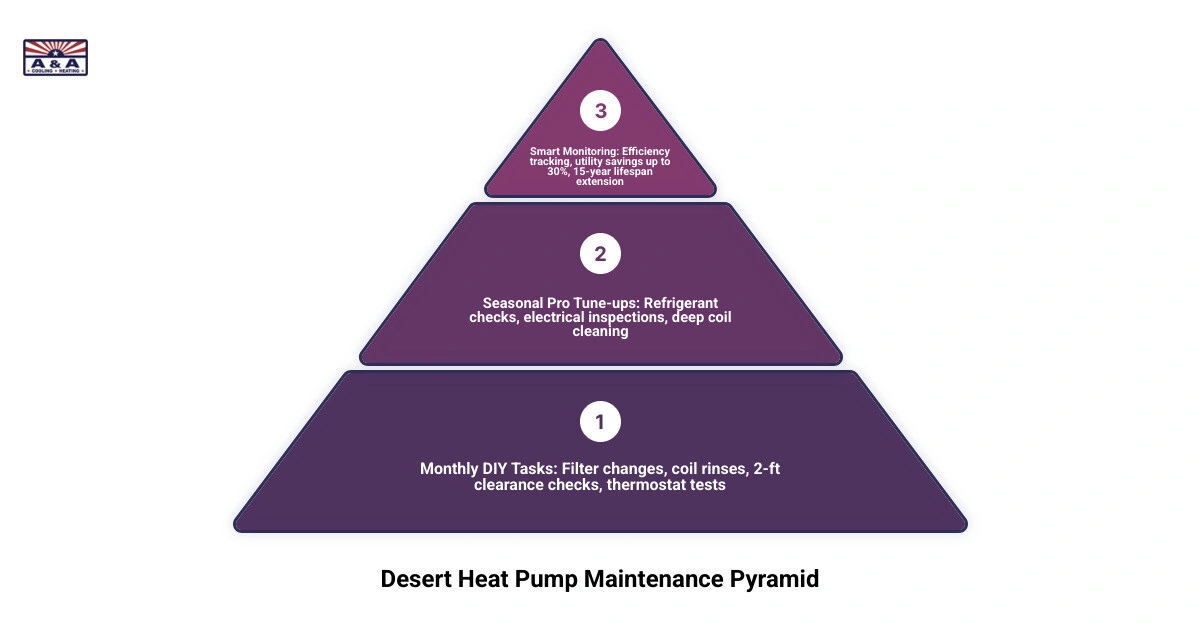
Here's a quick overview of the essential tasks:
Desert Heat Pump Maintenance Checklist at a Glance:
Right now, in May 2026, temperatures across the Phoenix Valley are already climbing toward triple digits — and your heat pump is about to work harder than almost any other system in the country. Desert dust, haboob storms, and relentless heat stress every component in ways that standard maintenance schedules simply weren't built to handle.
The numbers tell a clear story. Unmaintained heat pumps use 25% more energy than properly serviced systems. Neglected filters and dirty coils don't just hurt efficiency — they can cut years off your system's life and lead to expensive emergency repairs at the worst possible moment.
The good news? A consistent maintenance routine — combining simple monthly DIY tasks with twice-yearly professional service — can extend your system's lifespan by up to 15 years and reduce energy bills by as much as 20-30%.
This guide breaks it all down into a clear, actionable checklist built specifically for desert conditions.
Living in places like Apache Junction, Mesa, or Scottsdale means your HVAC system faces environmental challenges that homeowners in other parts of the country simply don't understand. The Arizona desert is a beautiful place, but it is incredibly harsh on mechanical equipment.
First, there is the sheer heat. When the thermometer hits 115°F, your heat pump is under immense pressure to move heat out of your home. If the system is even slightly inefficient, it has to run longer and harder to keep up. Second, we have the dust. Between the daily desert breeze and the massive haboobs that roll through the Phoenix Valley, your system is constantly inhaling fine grit. This dust acts like sandpaper on moving parts and a blanket on cooling coils.
We often talk about What Shortens Your Heat Pump Lifespan in the Desert, and the answer is almost always neglected maintenance. A system that isn't cleaned regularly can lose 20% of its cooling capacity just from a small amount of refrigerant loss or a layer of grime.
Many people ask, Are Heat Pumps Efficient in Desert Climates? The answer is a resounding yes—but only if they can "breathe." Proper maintenance can extend your system's life to its full 15-year potential. Without it, you might be looking at a total replacement years earlier than expected.
| Feature | Maintained System | Unmaintained System |
|---|---|---|
| Energy Consumption | Standard (Baseline) | 25% Higher |
| Lifespan | 15+ Years | 7–10 Years |
| Repair Frequency | Rare/Predictable | Frequent/Emergency |
| Monthly Bills | Lower (20-30% savings) | Significantly Higher |
| Air Quality | Clean/Filtered | Dusty/Allergen-heavy |
You don't need a tool belt to keep your system running smoothly. In fact, about 60% of preventable HVAC issues can be managed by homeowners performing simple visual checks and basic cleaning. In the desert, these tasks should be performed every single month, especially during the peak cooling season from April to October.
_compressed.webp "A homeowner in a sun-drenched Arizona home checking a dusty air filter near the intake vent")
Start with a visual inspection. Look at your indoor unit for any signs of water pooling (which indicates a clogged drain line) and listen for any new rattles or squeaks. Ensure that your supply and return vents are not blocked by furniture or curtains. Maximizing Heat Pump Efficiency starts with ensuring unobstructed airflow throughout the house.
Don't forget the thermostat! Check the display to ensure it is functioning correctly and replace the batteries once a year. A thermostat with dying batteries can cause the system to cycle erratically, putting unnecessary stress on the compressor.
In the desert, your air filter is your first line of defense against the "dust-pocalypse." While some national guides suggest changing filters every three months, that simply doesn't work in Arizona. We recommend checking your filter every 30 days. If you have pets or live near a construction site in a growing area like Queen Creek or Buckeye, you may need to replace it even more frequently.
When choosing a filter, pay attention to the MERV (Minimum Efficiency Reporting Value) rating. For most residential heat pumps, a MERV 8 to MERV 11 filter is the "sweet spot." These are effective enough to catch dust, pollen, and pet dander without being so thick that they restrict airflow. Using a filter with a MERV rating that is too high (like MERV 13+) can actually cause your blower motor to burn out because it has to work too hard to pull air through the mesh.
For more details on choosing the right components, check out our Energy Efficient Heat Pump Guide. Keeping a clean filter doesn't just lower your bills; it significantly improves your indoor air quality, reducing allergens and respiratory irritants in your home.
Your outdoor unit (the condenser) needs plenty of "elbow room" to reject heat effectively. In our desert landscapes, it’s common for desert broom, bougainvillea, or even tumbleweeds to crowd the unit.
Always maintain at least a 2-foot clearance on all sides of the unit. Trim back any shrubs and remove any debris that has blown against the fins. After a dust storm or monsoon, it is a great idea to give the unit a "bath." Use a garden hose on a gentle setting to rinse the dust off the exterior coils. Never use a pressure washer, as the high-pressure water can bend the delicate aluminum fins, permanently damaging the unit's ability to cool.
While DIY tasks are essential, they can’t replace the trained eye of a professional. We recommend scheduling a tune-up twice a year: once in the spring to prep for the cooling season and once in the fall to ensure the heating components and defrost cycles are ready for our chilly desert nights.
Annual Heat Pump Maintenance performed by NATE-certified technicians ensures that your system remains in compliance with manufacturer warranties. Most brands require professional service records to honor parts warranties if something major fails. Beyond the paperwork, professional service is where you find the real savings. You can learn more about How a Heat Pump Saves Money in the Arizona Desert by looking at how a finely tuned system sips electricity rather than gulping it.
When our technicians arrive for a scheduled visit, we go deep into the system's "vital organs." One of the most critical checks is the refrigerant level. A system that is even 10% low on refrigerant can lose 20% of its cooling capacity, causing it to run almost constantly.
We also focus heavily on the electrical components. In the extreme Arizona heat, capacitors—the small cylindrical parts that give your motors the "kick" they need to start—are the number one failure point. A typical capacitor in Arizona only lasts about 3 to 5 years. By testing them during a routine visit, we can replace a weakening capacitor before it leaves you without AC on a 110-degree Sunday afternoon.
Other professional tasks include:
For more information on why these steps are vital, see how Heat Pump Maintenance Keeps Systems Running through the most demanding seasons.
A professional cleaning goes much further than a garden hose rinse. We use specialized, coil-safe cleaners to remove the deep-seated grime from the evaporator coils inside your home. This is essential for preventing mold growth and ensuring maximum heat transfer.
We also flush the condensate drain line. In the desert, "dust mud" can build up in these lines, leading to clogs that can cause water damage to your home or trigger a safety switch that shuts your system down entirely.
Finally, we perform performance benchmarking. We measure the airflow and the "temperature differential" (the difference in temperature between the air entering the system and the air coming out of the vents). This tells us exactly how efficiently your system is performing. We also inspect the ductwork. Since the average home loses 20 to 30 percent of its conditioned air through leaky ducts, catching these holes can save you hundreds of dollars a year. Recognizing Signs of Heat Pump Issues early through benchmarking is the best way to avoid a mid-summer catastrophe.
One of the easiest ways to bolster your heat pump maintenance checklist for desert homes is to upgrade to a smart thermostat. These devices are the "brains" of your HVAC system and can yield 12-18% annual savings when used correctly.
In Arizona, we recommend keeping your thermostat between 68-72°F during the winter and as high as is comfortable (ideally 76-78°F) during the summer. For heat pumps specifically, "set it and forget it" is often better than making huge temperature swings, which can trigger the expensive "auxiliary heat" mode.
Smart thermostats allow for "auxiliary heat lockouts," which prevent the backup electric heat strips from turning on unless the outdoor temperature drops below a certain point. This is one of the many Heat Pump Benefits for Arizona Homeowners that leads to lower utility bills. With WiFi connectivity, you can also monitor your system from your phone while you're at work in Phoenix or on vacation, ensuring everything is running smoothly.
Even with the best maintenance, parts eventually wear out. Knowing the red flags can help you call for help before a minor issue becomes a total system failure.
If you notice any of the following, refer to our guide on Signs Heat Pump Needs Professional Repair and give us a call:
You should check your air filter every 30 days. In the dusty environments of the East Valley, filters load up with debris 2-3 times faster than in more humid climates. If the filter looks grey or "fuzzy," replace it immediately. Generally, you will need a new one every 30 to 60 days.
DIY maintenance focuses on cleanliness and airflow—things like changing filters, clearing weeds, and rinsing the outdoor unit. Professional maintenance involves technical diagnostics that require specialized tools and licensing, such as checking refrigerant pressures, testing electrical capacitors, and inspecting internal motor components for safety.
Absolutely. A well-maintained heat pump can reduce your energy bills by 20% to 30%. By ensuring the coils are clean and the refrigerant is at the proper level, the system doesn't have to run as long to reach your desired temperature, which directly translates to lower costs on your monthly utility statement. Check out more tips on Maximizing Heat Pump Efficiency for further savings.
Taking care of your HVAC system in the desert doesn't have to be a daunting task. By following a consistent heat pump maintenance checklist for desert homes, you are investing in your home's long-term comfort and efficiency. From the dusty streets of Gilbert to the quiet neighborhoods of Gold Canyon, every Arizona home benefits from a system that is clean, tuned, and ready for the heat.
At A & A Cooling & Heating LLC, we’ve been the trusted HVAC specialists in Apache Junction and the surrounding Phoenix Valley since 1976. We understand exactly what the desert sun does to your equipment, and our tailored maintenance plans are designed to keep you cool when it matters most.
Don't wait for the next record-breaking heatwave to find out if your system is ready. Schedule your desert heat pump service today and join our Cool Club to enjoy year-round peace of mind and reliability. Whether you are in Mesa, Tempe, or San Tan Valley, we are here to ensure your home remains a comfortable oasis.


A & A is professional, fast, and honest. They have a hometown work ethic and take care of you almost like family! Dave is a great tech and I would recommend him to anyone. We had our AC go out and they came out and stayed past 7 pm to keep us cool on a day when temps were going to reach 105! THANK YOU!

Excellent service, they are very dependable and upfront about the work. I would highly recommend this company for any heating or cooling issues. Being a snowbird it’s often scary finding reliable services, this is one company you can count on.

A & A is professional, fast, and honest. They have a hometown work ethic and take care of you almost like family! Dave is a great tech and I would recommend him to anyone. We had our AC go out and they came out and stayed past 7 pm to keep us cool on a day when temps were going to reach 105! THANK YOU!